28 September 2026 · Diwakar Chandra Gour
Top 10 Pharmaceutical Companies in the World
Introduction
The global pharmaceutical industry is one of the most research-intensive sectors in healthcare. Pharmaceutical companies invest heavily in drug discovery, clinical development, manufacturing, regulatory science, biotechnology, diagnostics, and patient access. Their work influences how new medicines are developed and delivered across areas ranging from oncology and immunology to diabetes, cardiovascular disease, infectious diseases, rare diseases, and neurological disorders.
The world's largest pharmaceutical companies also increasingly operate at the intersection of science and technology. Artificial intelligence, machine learning, genomics, real-world data, digital health, advanced manufacturing, cell and gene therapy, and precision medicine are becoming increasingly important to pharmaceutical research and commercial strategies.
This article examines 10 of the world's largest and most influential pharmaceutical companies using recent pharmaceutical-sales data and broader industry relevance as the principal reference points. The list is designed to be useful for pharmaceutical professionals, researchers, students, healthcare organizations, investors, entrepreneurs, biotechnology companies, and technology providers.
Why the World's Largest Pharmaceutical Companies Matter
A company's size alone does not determine its scientific or healthcare importance. However, large pharmaceutical companies can provide significant resources for research, clinical development, manufacturing, regulatory activities, and global commercialization.
They also provide important opportunities for collaboration across the pharmaceutical and healthcare ecosystem.
Key areas where major pharmaceutical companies influence the sector include:
- Drug discovery and development
- Clinical trials and translational medicine
- Biologics and advanced therapies
- Cell and gene therapy
- Oncology and immunology
- Vaccines and infectious diseases
- Diabetes and metabolic health
- Rare-disease research
- Digital health and healthcare data
- Artificial intelligence and machine learning
- Pharmaceutical manufacturing and supply chains
- Regulatory science and patient access
The industry is also becoming increasingly interdisciplinary. Pharmaceutical research now frequently involves data scientists, computational biologists, software engineers, clinicians, geneticists, regulatory specialists, manufacturing experts, and healthcare technology companies.
Top 10 Pharmaceutical Companies in the World
The following list uses 2025 pharmaceutical-sales data as its primary quantitative reference, supplemented by research activity, therapeutic breadth, global presence, innovation relevance, and industry significance.
| Rank | Pharmaceutical company | Headquarters | Approx. 2025 pharmaceutical sales |
|---|---|---|---|
| 1 | Eli Lilly and Company | Indianapolis, USA | $65.2 billion |
| 2 | AbbVie Inc. | North Chicago, USA | $61.2 billion |
| 3 | Johnson & Johnson | New Brunswick, USA | $60.4 billion |
| 4 | AstraZeneca | Cambridge, UK | $55.6 billion |
| 5 | Novartis | Basel, Switzerland | $54.5 billion |
| 6 | Merck & Co., Inc. | Rahway, USA | $54.2 billion |
| 7 | Roche | Basel, Switzerland | $53.8 billion |
| 8 | Pfizer Inc. | New York, USA | $50.3 billion |
| 9 | Sanofi | Paris, France | $49.3 billion |
| 10 | Bristol Myers Squibb | Princeton, USA | $46.8 billion |
The sales figures above are intended as a comparable pharmaceutical-industry measure. Company reporting structures differ, particularly where businesses include medical devices, diagnostics, animal health, consumer healthcare, or other operations.
1. Eli Lilly and Company
Headquarters: Indianapolis, Indiana, United States
Official website: https://www.lilly.com/
Eli Lilly and Company is one of the world's largest pharmaceutical companies and has become particularly prominent in metabolic health, diabetes, obesity, oncology, neuroscience, and immunology.
The company has a long history of pharmaceutical research and has developed medicines across several major therapeutic categories. Its recent commercial expansion has been strongly associated with medicines based on incretin biology, particularly treatments involving tirzepatide.
Lilly reported 2025 revenue of approximately $65.2 billion, with substantial growth driven by Mounjaro and Zepbound.
Beyond commercial performance, Lilly's relevance extends to drug discovery, clinical research, manufacturing capacity, and the development of next-generation medicines. Its activities illustrate the growing importance of metabolic disease research within the pharmaceutical sector.
For researchers and healthcare professionals, Lilly is particularly relevant to diabetes, obesity, oncology, neuroscience, immunology, and pharmaceutical development.
2. AbbVie Inc.
Headquarters: North Chicago, Illinois, United States
Official website: https://www.abbvie.com/
AbbVie is a research-based biopharmaceutical company with major activities in immunology, oncology, neuroscience, aesthetics, eye care, gastroenterology, and other specialty areas.
The company has developed a diversified portfolio following its separation from Abbott and has expanded its presence through internal research, licensing, acquisitions, and partnerships.
Its immunology business has historically been a major component of its pharmaceutical operations, while its broader portfolio includes medicines and therapies across several complex disease areas.
AbbVie recorded approximately $61.2 billion in 2025 pharmaceutical sales in the referenced industry comparison.
The company's activities are relevant to professionals studying biologic medicines, immunology, oncology, neuroscience, specialty pharmaceuticals, clinical development, and commercialization.
3. Johnson & Johnson
Headquarters: New Brunswick, New Jersey, United States
Official website: https://www.jnj.com/
Johnson & Johnson is a major global healthcare company with operations spanning Innovative Medicine and MedTech.
Its pharmaceutical business focuses on areas including oncology, immunology, neuroscience, cardiovascular disease, and other conditions. Its MedTech activities provide an additional connection between pharmaceutical research, medical devices, surgery, diagnostics, and healthcare delivery.
The company reported approximately $60.4 billion in 2025 sales for its Innovative Medicine segment.
Johnson & Johnson's broad healthcare footprint makes it particularly relevant to professionals interested in the intersection of pharmaceuticals, medical technology, advanced therapies, clinical research, and patient care.
Its research portfolio also includes biologic medicines and cell therapy, making the company relevant to discussions around next-generation treatment platforms.
4. AstraZeneca
Headquarters: Cambridge, United Kingdom
Official website: https://www.astrazeneca.com/
AstraZeneca is a global biopharmaceutical company with major research and commercial activities in oncology, cardiovascular, renal and metabolic diseases, respiratory medicine, immunology, and rare diseases.
The company has increasingly emphasized innovative medicines and biologics, with oncology representing a particularly important part of its research and commercial portfolio.
AstraZeneca reported total revenue of approximately $58.7 billion in 2025. Its annual report highlighted continued commercial performance and progress across its development pipeline.
The company's research activities make it relevant to professionals working in cancer biology, precision medicine, respiratory disease, cardiovascular and metabolic health, rare diseases, clinical trials, and translational research.
Its global research network also demonstrates the increasingly international nature of pharmaceutical development.
5. Novartis
Headquarters: Basel, Switzerland
Official website: https://www.novartis.com/
Novartis is a Switzerland-based pharmaceutical company focused on innovative medicines. Following the transformation of its business portfolio, the company has concentrated its research and commercial activities around areas such as cardiovascular, renal and metabolic diseases, immunology, neuroscience, and oncology.
Novartis reported approximately $54.5 billion in net sales in 2025.
The company is also active in advanced therapeutic approaches and has experience with radioligand therapy, biologics, gene-based technologies, and other specialized treatment platforms.
For researchers, Novartis is particularly relevant to oncology, cardiovascular medicine, immunology, neuroscience, advanced therapies, drug discovery, and clinical research.
Its position in Basel also places it within one of Europe's important pharmaceutical and life-sciences ecosystems.
6. Merck & Co., Inc.
Headquarters: Rahway, New Jersey, United States
Official website: https://www.merck.com/
Merck & Co., Inc., known as MSD outside the United States and Canada, is a major pharmaceutical and healthcare company with businesses spanning prescription medicines, vaccines, and animal health.
Its pharmaceutical portfolio includes major activities in oncology, infectious diseases, vaccines, cardiometabolic medicine, and other therapeutic areas.
In 2025, the company reported pharmaceutical sales of approximately $58.1 billion when measured according to its pharmaceutical segment. Its total company revenue was higher because Merck also reports animal-health and other revenue.
Oncology has been a particularly important area for the company, with Keytruda representing a major component of its pharmaceutical portfolio.
Merck's research ecosystem is relevant to cancer research, immuno-oncology, vaccines, infectious diseases, clinical trials, biologics, and pharmaceutical innovation.
7. Roche
Headquarters: Basel, Switzerland
Official website: https://www.roche.com/
Roche is distinctive among the world's largest healthcare companies because of its combination of pharmaceuticals and diagnostics.
The company has major research activities in oncology, neuroscience, immunology, ophthalmology, hematology, and other disease areas. Its diagnostics business adds capabilities in molecular diagnostics, pathology, sequencing, and laboratory medicine.
Roche reported group sales of CHF 61.5 billion in 2025, including approximately CHF 47.7 billion from pharmaceuticals and CHF 13.8 billion from diagnostics.
The company's combination of medicines, diagnostics, data, and personalized healthcare makes it particularly relevant to precision medicine.
Roche is also active in research involving biomarkers, genomic technologies, artificial intelligence, clinical data, and advanced diagnostics.
For researchers and healthcare technology professionals, Roche offers an important example of how diagnostics and pharmaceutical development can increasingly operate as connected parts of modern healthcare.
8. Pfizer Inc.
Headquarters: New York City, United States
Official website: https://www.pfizer.com/
Pfizer is one of the world's most recognizable pharmaceutical companies, with a portfolio covering vaccines, oncology, internal medicine, inflammation and immunology, rare disease, and other therapeutic areas.
The company has extensive experience in drug discovery, clinical development, manufacturing, global commercialization, and vaccine research.
Pfizer reported 2025 revenue of approximately $62.6 billion across the company. Its pharmaceutical portfolio included major products such as Eliquis, the Prevnar vaccine family, and the Vyndaqel family.
Pfizer's research infrastructure and global manufacturing network make it relevant to pharmaceutical professionals across drug development, vaccines, biologics, clinical trials, regulatory affairs, and commercial strategy.
The company also illustrates how pharmaceutical businesses can experience major changes in revenue composition as demand for individual medicines and therapeutic categories evolves.
9. Sanofi
Headquarters: Paris, France
Official website: https://www.sanofi.com/
Sanofi is a major French pharmaceutical company with a global presence and a portfolio spanning immunology, vaccines, rare diseases, specialty care, and other areas of medicine.
The company has a particularly significant presence in vaccines through its Sanofi Pasteur business and has developed an increasingly focused strategy around innovative medicines.
Sanofi's research activities include immunological diseases, rare diseases, vaccines, inflammatory conditions, and specialty medicines.
The company's European base also makes it relevant to professionals interested in the European pharmaceutical ecosystem, including regulatory science, biotechnology, clinical research, manufacturing, and healthcare access.
Sanofi is also representative of the industry's continuing shift toward specialized medicines and biologic therapies.
10. Bristol Myers Squibb
Headquarters: Princeton, New Jersey, United States
Official website: https://www.bms.com/
Bristol Myers Squibb is a global biopharmaceutical company with a strong presence in oncology, hematology, immunology, cardiovascular disease, and other specialty areas.
The company has extensive expertise in innovative medicines, including biologic therapies and cell-based approaches.
Its research portfolio has made it particularly significant in oncology and hematology, while its broader activities cover immune-mediated diseases and cardiovascular conditions.
Bristol Myers Squibb reported approximately $46.8 billion in pharmaceutical sales in the 2025 industry comparison used for this article.
Its research and development activities make the company relevant to professionals interested in cancer treatment, immunotherapy, hematology, cell therapy, clinical research, and pharmaceutical innovation.
How These Pharmaceutical Companies Were Selected
There is no universally accepted definition of the "top" pharmaceutical company. Rankings can change significantly depending on whether the measurement is based on revenue, market capitalization, R&D spending, number of approved medicines, pipeline strength, geographic reach, therapeutic leadership, or another metric.
For this article, the ranking primarily uses comparable 2025 pharmaceutical-sales data, supported by broader qualitative considerations.
The methodology considers:
- Pharmaceutical sales: A measurable indicator of commercial scale within the pharmaceutical business.
- Research and development: The importance and breadth of ongoing pharmaceutical research.
- Therapeutic relevance: Presence in major disease areas and emerging therapeutic fields.
- Global reach: International operations, commercialization, clinical research, and healthcare impact.
- Innovation: Activity in areas such as biologics, precision medicine, cell and gene therapy, vaccines, advanced drug delivery, and digital technologies.
- Industry relevance: Importance to researchers, healthcare professionals, biotechnology companies, technology providers, and other stakeholders.
- Educational value: The extent to which a company provides useful examples of pharmaceutical R&D, commercialization, clinical development, and healthcare innovation.
The ranking should therefore not be interpreted as a definitive judgment about scientific quality or patient benefit. A company specializing in a particular therapeutic field may be considerably more relevant to a researcher or organization working in that field than a larger company with a broader portfolio.
The Changing Pharmaceutical Industry
The world's leading pharmaceutical companies are operating in an environment that is changing rapidly.
Several developments are particularly important.
Artificial Intelligence and Drug Discovery
AI and machine learning are increasingly being explored for target identification, molecular design, clinical-trial optimization, medical-data analysis, and other stages of pharmaceutical research.
The practical value of these technologies depends on data quality, validation, scientific expertise, regulatory considerations, and successful translation into clinical development.
Cell and Gene Therapy
Cell and gene therapies are changing the development landscape for certain inherited, hematological, oncological, and other diseases.
These therapies also introduce complex manufacturing, logistics, safety, regulatory, and reimbursement requirements.
Precision Medicine
Genomic information, biomarkers, molecular diagnostics, and patient-specific data are increasingly important in the development and selection of therapies.
Companies such as Roche demonstrate how diagnostics can become closely connected with pharmaceutical development and personalized healthcare.
Digital Transformation
Pharmaceutical companies are investing in data platforms, digital clinical trials, automation, connected manufacturing, and other technologies.
This is creating new opportunities for collaboration between pharmaceutical companies and organizations specializing in data science, artificial intelligence, machine learning, software, and healthcare technology.
Pharmaceutical Conferences and Industry Knowledge Exchange
For professionals working across pharma, biotechnology, healthcare technology, and data-driven medicine, conferences can provide opportunities to follow emerging research and exchange ideas with peers.
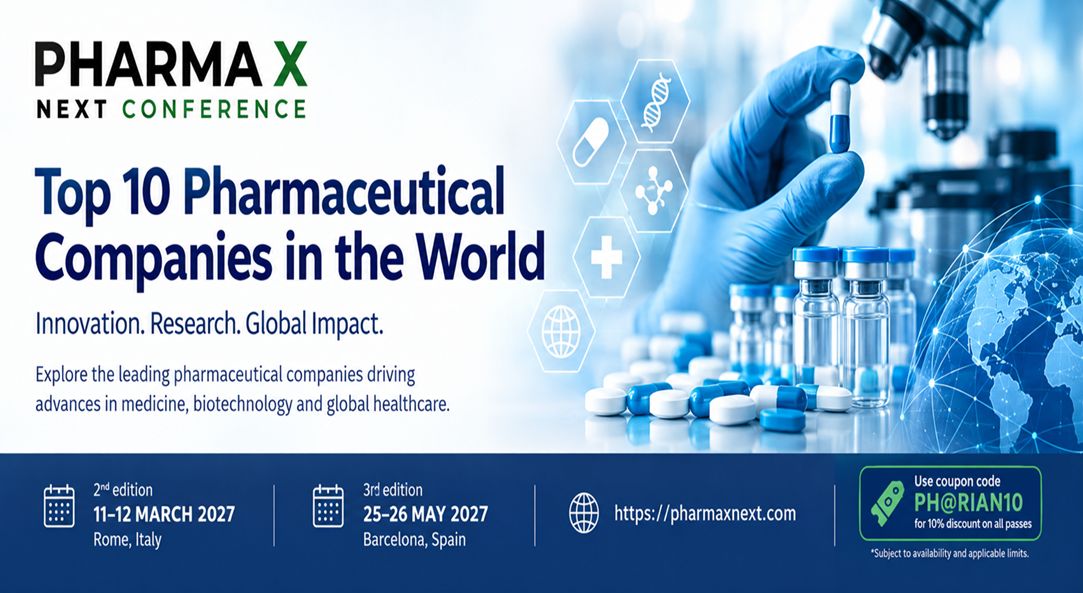
The 2nd edition PharmaX Next Awards & Conference Italy 2027 is scheduled for 11–12 March 2027 in Rome, Italy. The event focuses on pharmaceutical science, biotechnology, artificial intelligence, digital transformation, healthcare, and related areas.
It is positioned as an international platform bringing together data science, artificial intelligence, machine learning, technology, business, and innovation professionals alongside researchers and professionals from pharmaceutical and healthcare fields.
Official website:
The 3rd edition Global Impact Pharma Awards & Summit 2027 is scheduled for 25–26 May 2027 in Barcelona, Spain, with a broader focus on pharmaceutical and healthcare innovation, industry leadership, biotechnology, and technology.
These types of multidisciplinary events can be relevant to professionals looking to understand how pharmaceutical research is increasingly connected with AI, data science, biotechnology, healthcare technology, and business.
Readers interested in attending either conference can check the official website for current registration information. The promotional code PH@RIAN10 provides a 10% discount on passes, subject to the applicable limits and availability.
Frequently Asked Questions
What is the largest pharmaceutical company in the world?
The answer depends on the measurement used. Based on the 2025 pharmaceutical-sales comparison used in this article, Eli Lilly ranks first among the 10 companies listed. Rankings based on total company revenue, market capitalization, R&D spending, or other measures can produce different results.
Which pharmaceutical companies are leading in research and development?
Several companies on this list maintain substantial research organizations and pipelines, including Eli Lilly, Roche, AstraZeneca, Novartis, Merck, Pfizer, Johnson & Johnson, AbbVie, Sanofi, and Bristol Myers Squibb.
The relevant leader depends on the therapeutic area and research metric being considered.
Which pharmaceutical companies work in biotechnology?
Most of the companies listed operate extensively in biotechnology. Their activities include biologic medicines, antibody-based therapies, cell therapy, gene-based approaches, vaccines, molecular diagnostics, and other advanced technologies.
Which pharmaceutical companies are active in AI?
Major pharmaceutical companies are exploring artificial intelligence and machine learning for areas such as drug discovery, clinical research, medical data analysis, manufacturing, diagnostics, and commercial operations. The extent and specific applications vary by company and over time.
Are pharmaceutical companies involved in gene therapy?
Yes. A number of major pharmaceutical companies have developed, acquired, partnered on, or invested in gene and cell therapy technologies. However, the maturity of these programs varies considerably between companies and therapeutic areas.
Which country has the most major pharmaceutical companies?
The United States is home to many of the world's largest pharmaceutical companies, while Switzerland, the United Kingdom, France, Germany, Japan, and Denmark also have significant pharmaceutical industries.
Is revenue the best way to rank pharmaceutical companies?
No. Revenue provides a useful and relatively comparable measure of commercial scale, but it does not measure every aspect of pharmaceutical importance.
Researchers may instead prioritize R&D activity, scientific publications, clinical trials, pipeline quality, therapeutic specialization, or access to specific technologies.
Are these rankings permanent?
No. Pharmaceutical-company rankings can change from year to year because of new product launches, patent expirations, acquisitions, divestitures, currency movements, regulatory developments, and changes in demand.
Conclusion
The world's leading pharmaceutical companies operate at the center of a complex ecosystem involving scientific research, biotechnology, healthcare, data, technology, manufacturing, regulation, and patient care.
Eli Lilly, AbbVie, Johnson & Johnson, AstraZeneca, Novartis, Merck, Roche, Pfizer, Sanofi, and Bristol Myers Squibb represent major participants in the global pharmaceutical industry. Their strengths differ considerably across therapeutic areas, research technologies, geographic markets, and business models.
For professionals and organizations evaluating pharmaceutical companies, revenue is only one starting point. Research capabilities, clinical-development expertise, therapeutic focus, innovation, technology adoption, global reach, and opportunities for collaboration can be equally important.
As pharmaceutical science becomes increasingly connected with artificial intelligence, machine learning, genomics, biotechnology, precision medicine, and digital healthcare, collaboration across disciplines is likely to remain an important part of the industry's development.
For the latest information about PharmaX Next Awards & Conference Italy 2027 and related pharmaceutical industry events, readers should consult: